Friday, October 30, 2020

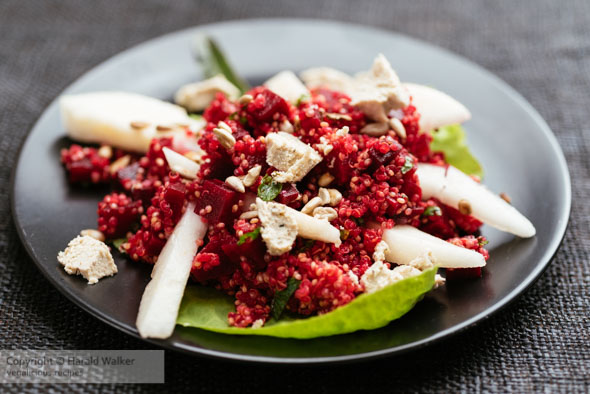
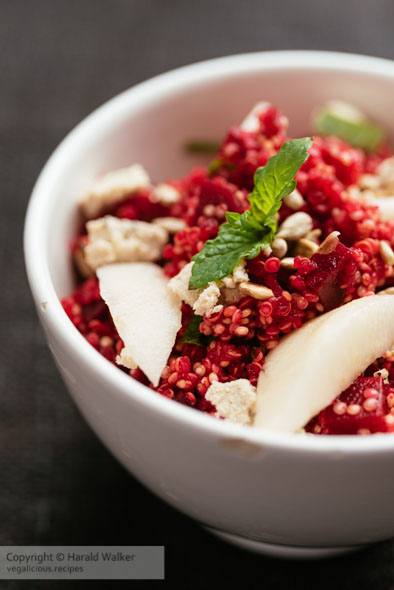
Quinoa and Pickled Beet Salad with Pears and Mint

This is a lovely salad, full of flavors, textures and color. There are also a lot of alternatives that would taste nice, see the notes below.
Serving Size: 4

Ingredients:

  • 4 medium beets, washed, peeled, cut and pickled
  • 1 cup quinoa
  • 2 cups beet cooking/pickling liquid , can be stretched out with water if needed
  • handful mint leaves, minced or julienned
  • 2 ripe pears, peeled and sliced
  • handful sunflower seeds, toasted (can also be pine nuts).
  • 1 ounce vegan feta, crumbled

Directions:

  1. Much of the preparation for the salad can be and should be done ahead of time, ie. pickling the beets, cooking the quinoa as these take time, and it takes time for them to cool down.
  2. First you will want to pickle your beets (or buy pickled beets from the store).
    1. Peel the beets.
    2. Cut them in which ever shape you prefer (I cubed them).
    3. Set them in a pot of water, just cover with water, add 1/4 cup vinegar, pinch of salt and 2 tablespoons sugar. Optionally you can add a sliced onion, and seasonings as allspice or cloves, but they are not really needed for the salad.
    4. Cook then beets until they are soft.
    5. Using a slotted spoon, remove the beets from the liquid and set the beets in a bowl to cool.
  3. Wash the quinoa well in a sieve with running water.
  4. Place the washed quinoa in the pot with the beet liquid.
  5. Bring the liquid to a boil, then turn to simmer. If there is not enough liquid, add water as needed.
  6. Cook for about 10 minutes until the quinoa is done and, puffed and soft. Most of the liquid will have been absorbed.
  7. Place a lid on the pot and allow to cool.
  8. Toast the sunflower seeds or pine nuts in a dry pan until lightly browned.
  9. To make the salad:
    1. Mince or julienne the mint. You should have 1/8 -1/4 cup depending on your preference.
    2. Fluff the quinoa and place in a salad bowl.
    3. Using a slotted spoon, add the beets to the quinoa and mix well.
    4. Mix in the mint.
    5. Taste the salad, thus far, ours did not need additional seasoning. But perhaps you wish to make a dressing for more flavor. I would suggest a simple oil and vinegar, with a bit of vegetable bouillon powder and maybe a splash of agave. If you add too much dressing the salad will clump together.
    6. Peel and slice the pears. Place some in the salad and add some once you have served the beets and quinoa on a plate. The beets will “color” the pears.
  10. We dressed the plates with a few mixed greens.
  11. Add the salad to the greens on the plate add the pears in various places.
  12. Sprinkle crumbled vegan feta here and there and sprinkle some sunflower seeds on top.
  13. Alternatively you can also serve the salad in bowls.

Notes:

This salad would also be nice with pineapple instead of the pears. You could also use pistachios, and as an alternative dressing you could do an Asian dressing with miso, toasted sesame oil, mirin and a bit of rice vinegar. But, it may “mask” the subtle flavors of the beets and quinoa.


from Vegalicious https://ift.tt/3kDNww6
via Why You Should Consider Buying Organic Food

Saturday, October 24, 2020

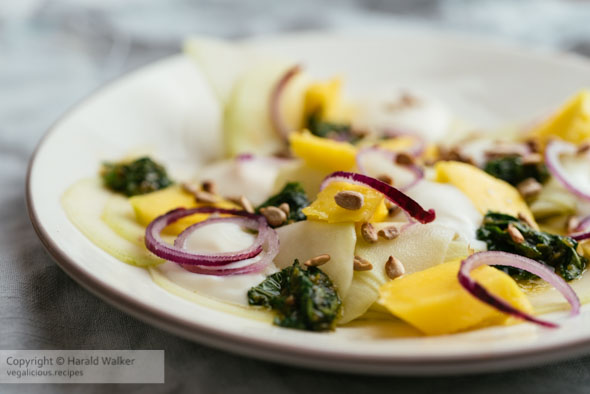
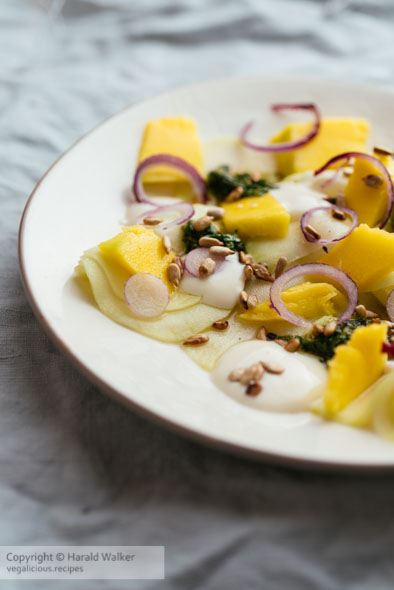
Marinated Kohlrabi and Mango Salad

This is a very nice fall salad. By marinating the thin kohlrabi slices, they become softer and very flavorful. The salad tastes especially nice with the vegan cream cheese and the mint and basil dressing.

Marinated Kohlrabi and Mango Salad

Serving Size: 4

Ingredients:

for the salad:

  • 1-2 med. kohlrabi, peeled and thinly sliced
  • 4 tablespoons sunflower seeds or pine nuts, toasted
  • 1 red onion, peeled and thinly sliced
  • 1 ripe mango, peeled and cut into bite-sized pieces
  • ¼-½ cups thickened soy yogurt or vegan cream cheese

for the marinade:

  • 4 tablespoons olive oil
  • 2-3 tablespoon lemon juice
  • pinch salt
  • pinch pepper

for the herb sauce:

  • 3 tablespoons neutral oil
  • 2 large springs mint, minced
  • 1 small bunch basil, minced
  • 1 clove garlic, minced
  • pinch salt and pepper

Marinated Kohlrabi and Mango Salad

Directions:

  1. First make the marinade for the kohlrabi. Mix the olive oil, lemon juice, sweetener, salt and pepper in a small bowl.
  2. Peel and thinly slice the kohlrabi (I used a mandolin).
  3. Place the kohlrabi slices in a bowl and pour the marinade over. Gently mix to cover each slice with marinade. Cover the bowl and allow the kohlrabi to season for 1 hour or more.
  4. Next, make the herbed sauce.
    1. Strip the leaves from the mint twigs and the basil leaves also, and mince them.
    2. Place in a small bowl.
    3. Add the neutral oil, minced garlic salt and pepper and mix well.
  5. Toast the sunflower seeds or pine nuts in a dry frying pan until they are golden brown.
  6. Peel and slice the mango and cut into bite sized pieces.
  7. To assemble the salad:
    1. Using a slotted spoon, place a generous amount of kohlrabi on each salad plate.
    2. Add the mango slices.
    3. Dollop a bit of the thickened soy yogurt or vegan cream cheese here and there and place a bit of the herbed sauce here and there over the salad.
    4. Add the onion slices.
    5. Sprinkle the sunflower seeds on top and serve.


from Vegalicious https://ift.tt/3jxGqrS
via Why You Should Consider Buying Organic Food
Friday, October 23, 2020

A Guide To Muesli Making From Vanessa Kimbell's Sweet Sourdough

Taken from The Sourdough School founder Vanessa Kimbell’s new book, Sweet Sourdough, this muesli guide encapsulates the concept at the heart of the book: to nourish the microbiome with the most diverse range of plants, nuts, seeds and grains available.


Diversity muesli mixes


While the flour blends are the base for biodiversity in all our bakes, mueslis are the key to super-boosting your range and diversity score. At the School, we use these mixes in the diversity breads and in our porridges. Sometimes I make my muesli from scratch, but often I find an organic version and add the more expensive ingredients or the ones I particularly like. It’s a shortcut, but it’s a good one on so many levels because you can vary your muesli regularly with no effort, you don't have to bulk buy, and it is fresher when bought in smaller quantities.

Oats are at the heart of muesli, and they’re one of the most important ingredients at the School. Oats are humble and affordable and have high amounts of beta-glucan. I often add my own dried cherries and mulberries to muesli mixes. I also add vanilla powder, chopped dark chocolate, and pistachios. I like what I like, but make it yours.

Here is a guide to some of the things I look for in a diverse muesli mix. Aim for at least 20 ingredients, with more if you can. My mixes generally have a combination of 30 ingredients, giving a 30 on the diversity score! A word of caution to anyone suffering from IBS – you may need to experiment to find a mix that suits you. Avoid adding dried fruits and seeds.
 

Making your own muesli mix


Make up any combination you like, following the proportions given here.

60% Flakes

A mix of oats, rye flakes, spelt flakes, barley flakes, wheat flakes, puffed quinoa, puffed rice, buckwheat flakes, coconut flakes.

10% Dried Fruit

Including raisins, sultanas, apricots, blueberries, dates, banana chips, cranberries, goji berries, dried plums, cherries, figs.

10% Freeze Dried Fruit

A little goes a long way. Include blackcurrants, raspberries, cranberries. You could also add some freeze-dried beetroot.

10% Nuts

Activated nuts (which have been soaked in water and salt and then dehydrated) are better. Include nuts such as hazelnuts, almonds, Brazil nuts, cashews, macadamia nuts, pistachios, pine nuts.

10% Seeds

Seeds are delicious and highly nutritious. Try golden flax seeds, pumpkin seeds, sunflower seeds, poppy seeds, fennel seeds, sesame seeds.

3% Spices

Try adding spices such as cinnamon, dried ginger, mixed spice, vanilla powder or nutmeg.


This recipe was from The Sourdough School: Sweet Baking: Nourishing the gut & the mind book by Vanessa Kimbell and will be published on 3 September 2020, £25.00 Hardback, Kyle Books, www.octopusbooks.co.uk


from Planet Organic Blog https://ift.tt/35pCEvB
via How to Save Money When Buying Organic Foods

Thursday, October 22, 2020

What is Water Kefir?

Agua de Madre is the leading water kefir brand in the UK; we have the highest number of live cultures per 100ml on the market. The drink is also thirst-quenching, seriously tasty and vegan.

So what is water kefir?


Water kefir is a live naturally sparkling drink, fermented with a water kefir mother culture, a naturally occurring symbiotic culture of bacterias and yeasts (SCOBY). It is very low in alcohol, organic, vegan and obviously packed with live cultures, which ensures it has a multitude of health benefits.

Our water kefir is made from the elemental Tibicos Mother Culture discovered two thousand years ago on the pads of the Mexican Opuntia cactus. We feed it, nurture it and use it to ferment our delicious probiotic drink.

The live culture is added to organic fruit and ginger and left for just the right amount of time to create our naturally fizzy low-alcohol water kefir with 55 billion live cultures per 100ml.

Through the process of fermentation, the sugar levels decrease and the gut-friendly flora increases, as the drink becomes lightly effervescent. Due to the multitude of bacteria (live cultures) found in water kefir it contributes to maintaining good gut health, which has a positive impact on our physical and mental wellbeing, ensuring a balanced ecosystem for our bodies and minds. The more diverse strains of bacteria found in your micro biome, the healthier you are.

What’s the difference between Kombucha and Water Kefir?


Water kefir is made with a different SCOBY to Kombucha and has different bacteria and yeasts. As the bacteria is predominantly lactobacillus which our guts naturally have, it is, therefore, easier for the gut to absorb the goodness from water kefir. Kombucha is predominantly acetic acid whereas as Water Kefir has a much gentler, softer mouthfeel.

Water kefir has 3 times the average amount of live cultures as Kombucha. It has no caffeine unlike Kombucha that is fermented with tea. Our water kefir is also vegan and organic.


Shop Agua De Madre Water Kefir at Planet Organic


from Planet Organic Blog https://ift.tt/2HvOOug
via How to Save Money When Buying Organic Foods

Agua de Madre Cocktail Hour

Here at Agua de Madre, we love cocktail hour! Below we have created some of our favourite cocktail’s all mixed with Agua de Madre just for Planet Organic. So why not enjoy a cocktail with a hit of gut boosting water kefir
 

LA MADRE

Ice with a top-up of Original Agua
Dash of grapefruit bitters
Garnish with smashed fresh mint

LA MADRE RITA

25ml - Tequila (or Mezcal)
25ml - Fresh lime juice
10ml - Simple syrup Ice
Top up with Original Agua and garnish with a lime wedge

LA PALOMA PICANTE

Rim glass with pepper smoked salt mix
25ml - Mezcal
10ml - Grapefruit juice (or large squeeze)
10ml - Fresh lime juice
10ml - Simple syrup (or small splash) Ice
Top up with Original or Pomegranate and Hibiscus Agua and garnish with grapefruit slice

LA CLEMENTINA

25ml - Black Cow Vodka
10ml - Clementine juice (or quarter squeeze) Ice and
Top up with Original or Pomegranate Hibiscus Agua
Garnish with clementine or orange slice

EL PADRE

25ml - Mezcal or Tequila
10-25ml - Campari
10-25ml - Cocchi/Vermouth Ice
Top up with Original Agua
Garnish with orange peel and sprig of rosemary lit and smoking
 

Shop Agua De Madre at Planet Organic


from Planet Organic Blog https://ift.tt/3dLAkTp
via How to Save Money When Buying Organic Foods

A Guide to Muesli Making with Sourdough School Sweet Baking


Diversity muesli mixes


While the flour blends are the base for biodiversity in all our bakes, mueslis are the key to super-boosting your range and diversity score. At the School, we use these mixes in the diversity breads and in our porridges. Sometimes I make my muesli from scratch, but often I find an organic version and add the more expensive ingredients or the ones I particularly like. It’s a shortcut, but it’s a good one on so many levels because you can vary your muesli regularly with no effort, you don't have to bulk buy, and it is fresher when bought in smaller quantities.

Oats are at the heart of muesli, and they’re one of the most important ingredients at the School. Oats are humble and affordable and have high amounts of beta-glucan. I often add my own dried cherries and mulberries to muesli mixes. I also add vanilla powder, chopped dark chocolate, and pistachios. I like what I like, but make it yours.

Here is a guide to some of the things I look for in a diverse muesli mix. Aim for at least 20 ingredients, with more if you can. My mixes generally have a combination of 30 ingredients, giving a 30 on the diversity score! A word of caution to anyone suffering from IBS – you may need to experiment to find a mix that suits you. Avoid adding dried fruits and seeds.
 

Making your own muesli mix


Make up any combination you like, following the proportions given here.

60% Flakes

A mix of oats, rye flakes, spelt flakes, barley flakes, wheat flakes, puffed quinoa, puffed rice, buckwheat flakes, coconut flakes.

10% Dried Fruit

Including raisins, sultanas, apricots, blueberries, dates, banana chips, cranberries, goji berries, dried plums, cherries, figs.

10% Freeze Dried Fruit

A little goes a long way. Include blackcurrants, raspberries, cranberries. You could also add some freeze-dried beetroot.

10% Nuts

Activated nuts (which have been soaked in water and salt and then dehydrated) are better. Include nuts such as hazelnuts, almonds, Brazil nuts, cashews, macadamia nuts, pistachios, pine nuts.

10% Seeds

Seeds are delicious and highly nutritious. Try golden flax seeds, pumpkin seeds, sunflower seeds, poppy seeds, fennel seeds, sesame seeds.

3% Spices

Try adding spices such as cinnamon, dried ginger, mixed spice, vanilla powder or nutmeg.


This recipe was from The Sourdough School: Sweet Baking: Nourishing the gut & the mind book by Vanessa Kimbell and will be published on 3 September 2020, £25.00 Hardback, Kyle Books, www.octopusbooks.co.uk


from Planet Organic Blog https://ift.tt/31yva8p
via How to Save Money When Buying Organic Foods

How A Healthy Gut Can Support a Healthy Immune System

Nutrition is complex, and the trillions of microbes living in your gut can be influenced by a whole host of external factors. Take a look at our guest post by Lisa from The Gut Stuff, as she shares her expertise on how we can tweak factors and lifestyle changes within our control to make positive changes and support our immune system.

We are starting to understand more about the importance of our immune system and it’s link with the gut – a staggering 70% of your immune system is found in your gut. Research shows that what goes on in your gut can impair or support your immune system and you have the power to look after both, not just for now, but for the future.

The immune system is complex and highly responsive to our external environment, from stress to what you eat. . What you may not know is that both the gut and the immune system have co-evolved and work alongside each other; so, it makes sense that a healthy gut can support a healthy immune system.

When ‘gut health’ is talked about, what is really being discussed is the physiological workings of your gut (e.g. motility) and the fascinating world of your gut microbiome, which is an entire ecosystem of microorganisms and their genetic material, such as bacteria, yeast and fungi, which live in, around and on us – the majority taking up residence in you large intestine. Think of your microbiome as a tropical jungle, home to lots of different species, each play their part in immunity and health A diverse gut microbiome is associated with better health – so . Like any ecosystem, your gut microbiome will occasionally find itself completely out of balance, and this is where you might experience digestive symptoms which can impair your immune system.


We know diet and lifestyle changes can support a healthier gut – these things aren’t found in a “magic elixir” or pill, they are simple, everyday swaps within everyone’s grasp.


1. Eat a Diet Rich in Plants


Just like us humans, different bacteria enjoy and thrive on different foods. Research shows we should be aiming for 30 different plant-based foods a week to support a diverse microbiome - so start writing a list now and see how many you achieve! Plant-based ingredients include non-perishable goods such as nuts, seeds, beans and pulses – so hopefully this takes off some of the pressure! Nuts and seeds are amazing sprinkled over smoothies, salads and added to stir-fries, which are a great way to make sure you’re using everything that you have stocked in the house! Start changing your mindset to addition rather than restriction!

2. Limit processed foods


It might sound obvious, a lot of highly processed foods tend to include additives and emulsifiers which can wreak havoc on your garden of microbes. Reducing your intake of processed foods (and drinks!) can be an easy win when it comes to looking after your microbes. Think about simple swaps such as using real cheddar over sliced sandwich cheese or a fizzy kombucha instead of a diet fizzy pop.

3. Get More Fibre!


Fibre is the unsung hero of nutrition and 9/10 of us aren’t getting enough of it. It is recommended that we consume around 30g of fibre per day – so you may be relieved to know that it’s not all prune juice and cereals at the source! To put 30g into context, one medium apple is around 2.1g - so it is a high number to hit! There are lots of different types of fibre (think of different varieties feeding different microbes) but luckily nature has packaged them up into plenty of plant-based foods – again, a variety of different fibres is key! Think whole grains, fruit, vegetables, nuts and pulses. Fibre plays an important role in gut health, it produces food for your bacteria to ferment, helps bulk out your stools making them softer and keeps things moving. And more seriously, a diet high in fibre can reduce the risk of developing high cholesterol, heart disease, diabetes, and bowel cancer. So, it has so many benefits beyond helping you “go”.

4. Start a Diary


This is NOT a food diary for calorie counting but to monitor what you’re eating, how you are feeling (mentally and physically), your poos (yes, really!!) and how much you are moving to help you “tune in” to your body and to spot patterns. When was the last time you asked yourself ‘how am I feeling today’? – understanding and listening to your body is a big part of understanding your gut and often we don’t listen to it until there’s something wrong or you’re not getting along. You’ll be surprised at how much you notice.

5. Where you can – De-Stress!


We know we are in stressful times, but stress, anxiety and depression can have a direct effect on your microbiome and how well your gut works and vice versa! Research shows that those suffering from anxiety and/or depression have a less diverse range of gut bacteria than those without. The current situation likely has us in “fight or flight mode”, taking three deep breaths can switch your body into “rest and digest” mode to tell your body it’s time to relax.

De-stressing doesn’t have to be long baths and downward dogs, find what relaxes you!

Check out The Gut Stuff's website for further information. 


from Planet Organic Blog https://ift.tt/3klL4KE
via How to Save Money When Buying Organic Foods